You Didn't Fail at CPAP. Your Mouth Did.
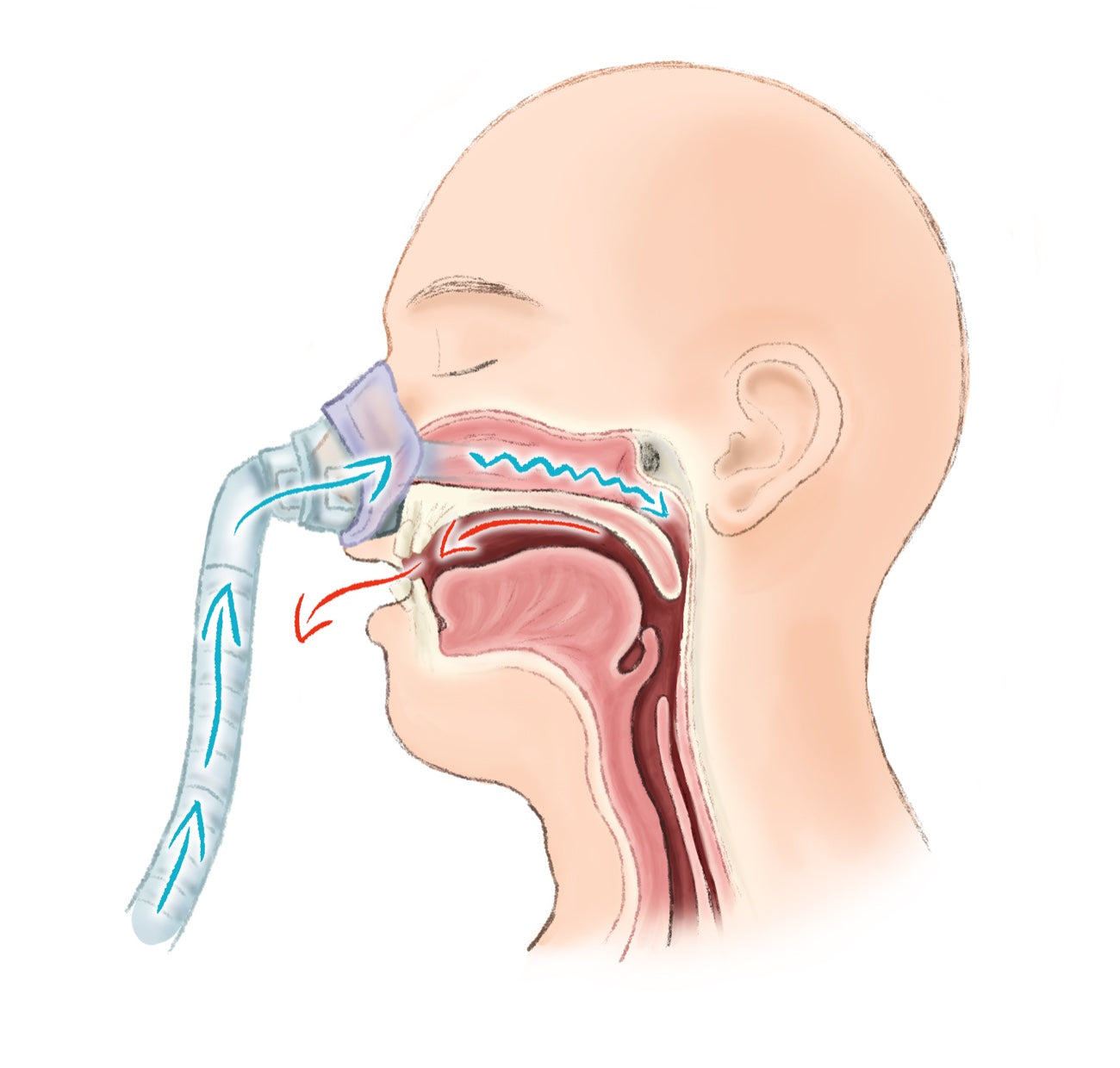
A nasal CPAP keeps your airway open by holding steady pressure inside it. If your mouth falls open as you sleep, that pressure escapes — so the therapy works less efficiently, just when you need it most. MyoTape keeps your lips gently closed, so the pressure stays where it belongs.
You did everything right. Got diagnosed, got the machine, and you wear it every single night. So why do you still wake up foggy and drained, like you barely slept?
Here's what often goes unexplained. A nasal CPAP works by creating enough pressure through your nose to hold your airway open while you sleep. For that pressure to do its job, it has to stay contained.
But the moment you fall asleep, your mouth drops open — and pressure escapes straight through it. The system becomes less efficient. And an open mouth can shift your jaw and tongue backwards too, making the airway itself less stable.
So you're wearing the machine faithfully, and still not getting everything it's meant to give you.
That's the gap MyoTape closes. It rests your lips gently together — without sealing your mouth shut — so the pressure stays contained and your therapy can work the way it's supposed to.
Left unchecked, this is often what lands people in a bulky full-face mask: sealing the mouth from the outside because it won't stay shut on its own. Close it gently first, and you may never need to.
Not to replace your therapy. To let it work properly.
10 reasons nasal-mask users reach for MyoTape
Not to replace your therapy — to help it work the way it's meant to.
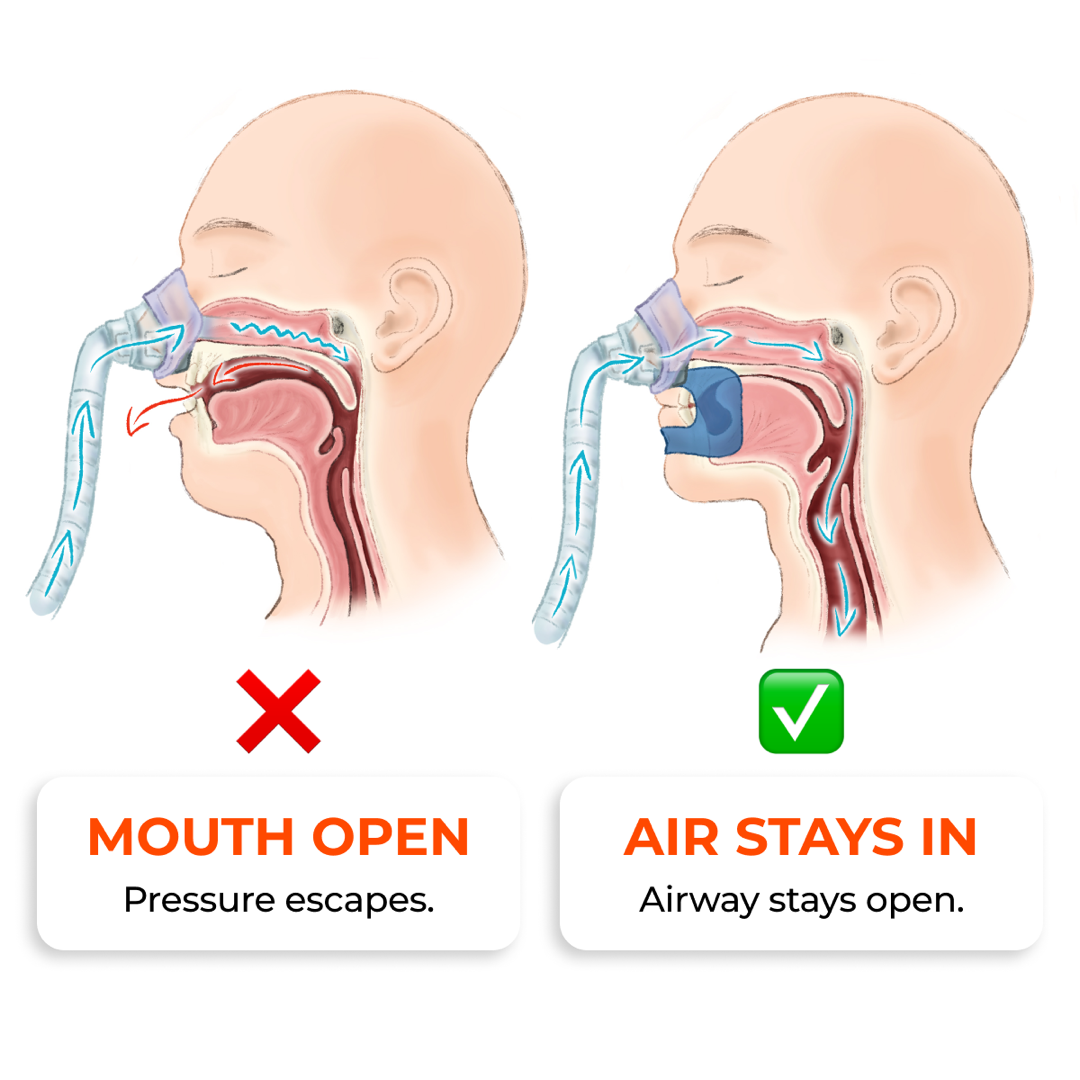
A nasal CPAP only holds your airway open while the pressure stays contained. When your mouth falls open, pressure escapes and the system works less efficiently — and the shift in your jaw and tongue can make the airway less stable too.
MyoTape keeps your lips resting together, so the pressure stays in and your prescribed therapy can do its job.
Keep using your CPAP as directed, and talk to your doctor about your settings.
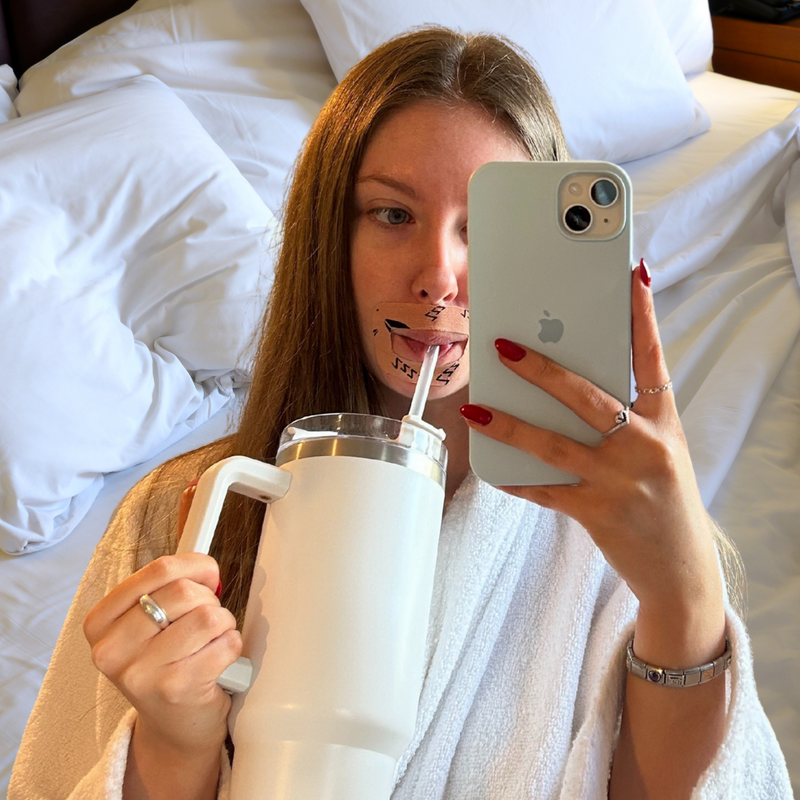
This is the fear everyone has: "I'm not taping my mouth closed while hooked to a machine." Neither would we.
MyoTape's design surrounds your lips with a light elastic. Your mouth is never covered — you can open it, talk, or cough freely at any time.
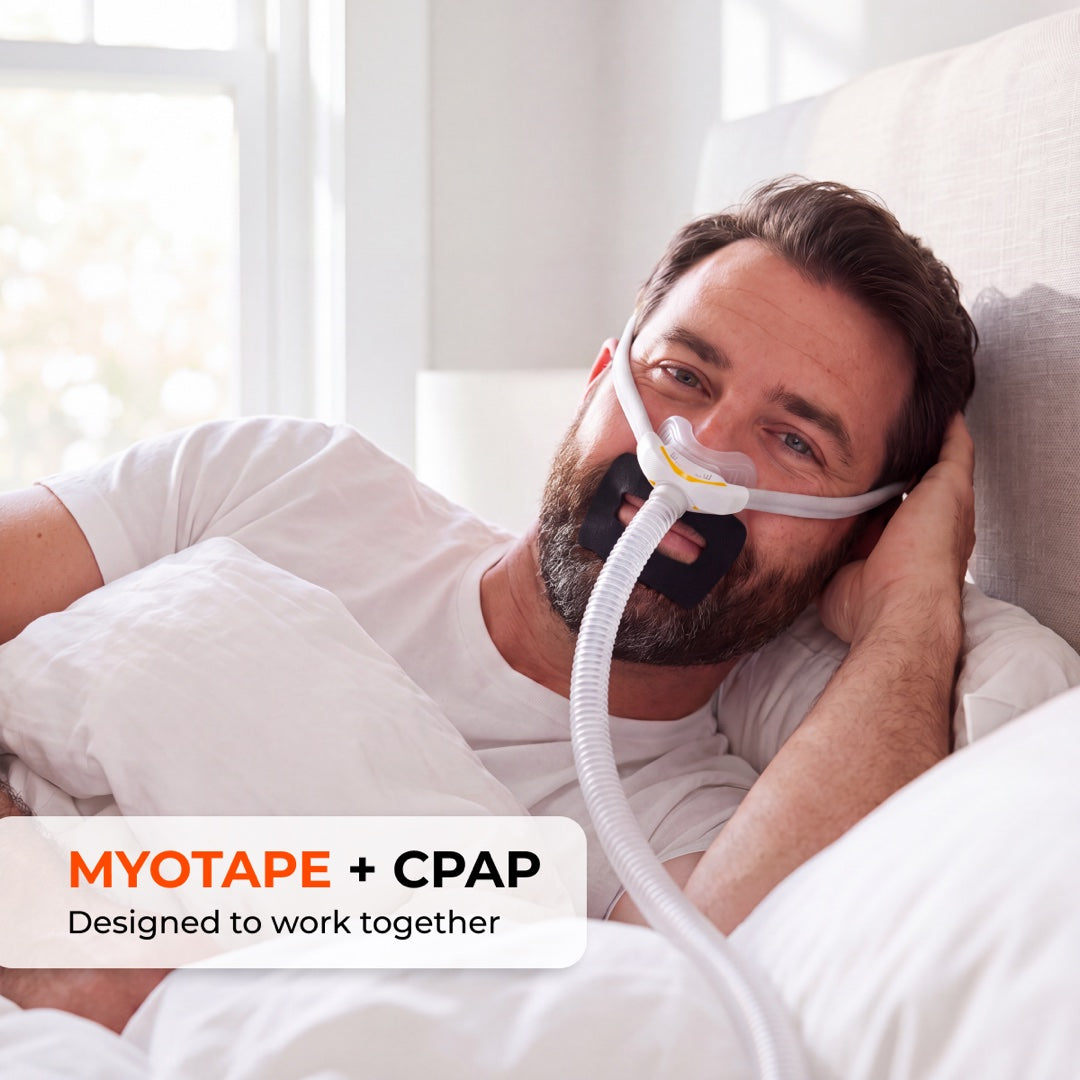
MyoTape isn't a replacement for your machine, and it isn't a treatment for sleep apnoea. It's the missing piece that helps your existing therapy feel the way it's supposed to.
Keep using your CPAP exactly as prescribed — MyoTape just handles the open-mouth problem your machine was never designed to solve.
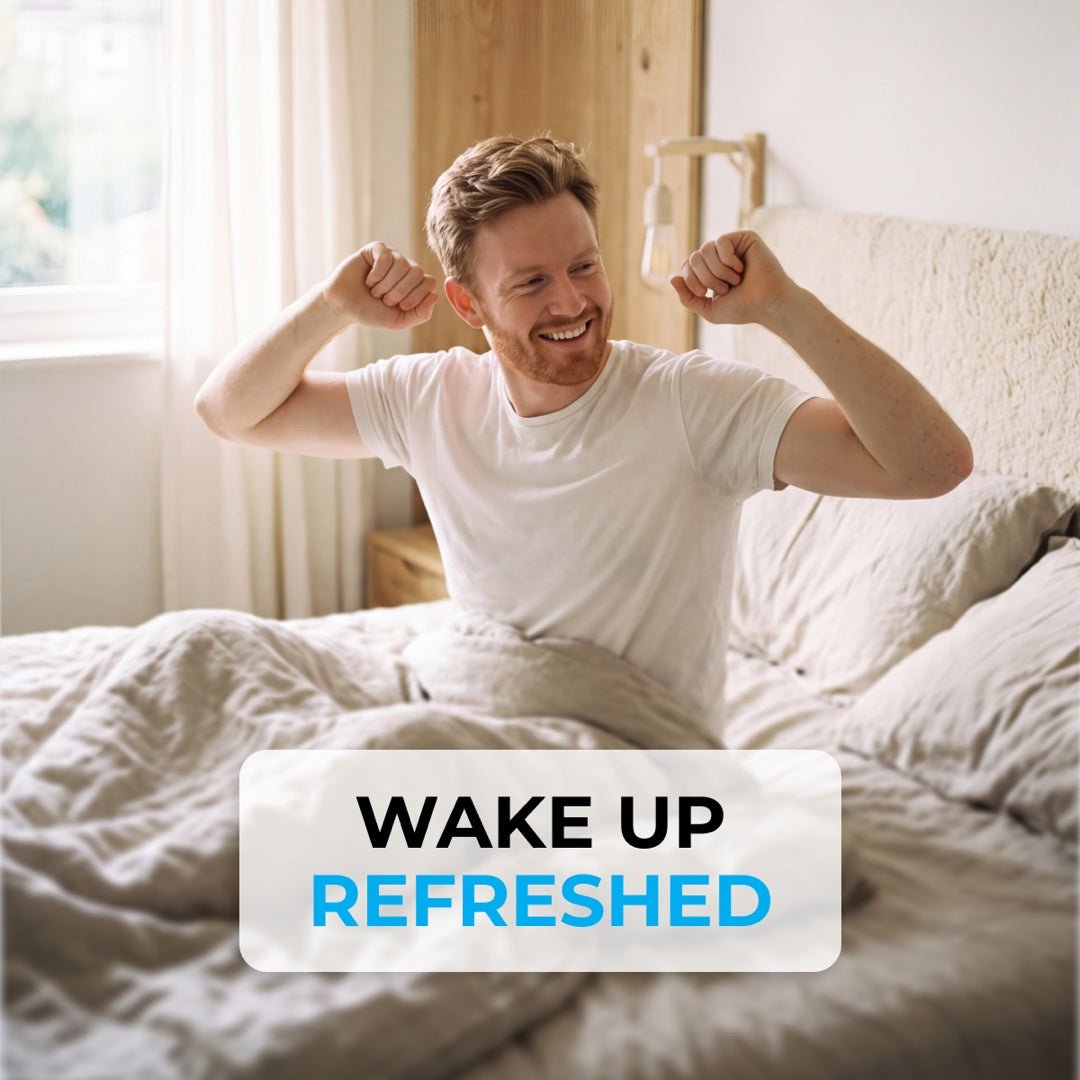
When pressure escapes through an open mouth, it dries everything on the way out — dry mouth and a raw throat are among the most common CPAP complaints.
Keep the lips gently closed and the air stays in the loop through your nose. Many users find the morning dry-mouth simply stops.
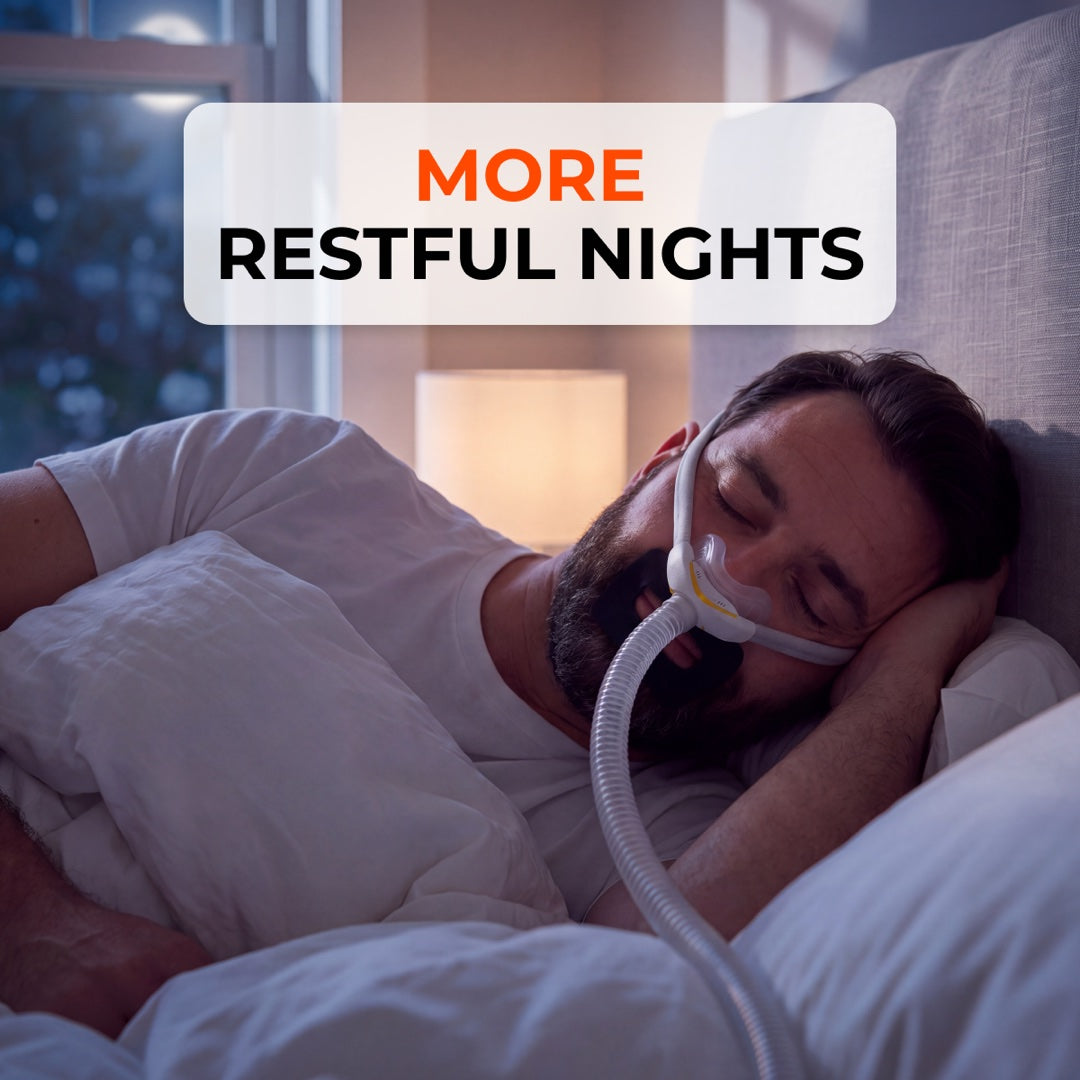
An open mouth doesn't just lose pressure — it makes for a more disrupted night, for you and whoever's next to you.
With your lips resting closed and the pressure staying where it should, nights tend to settle.
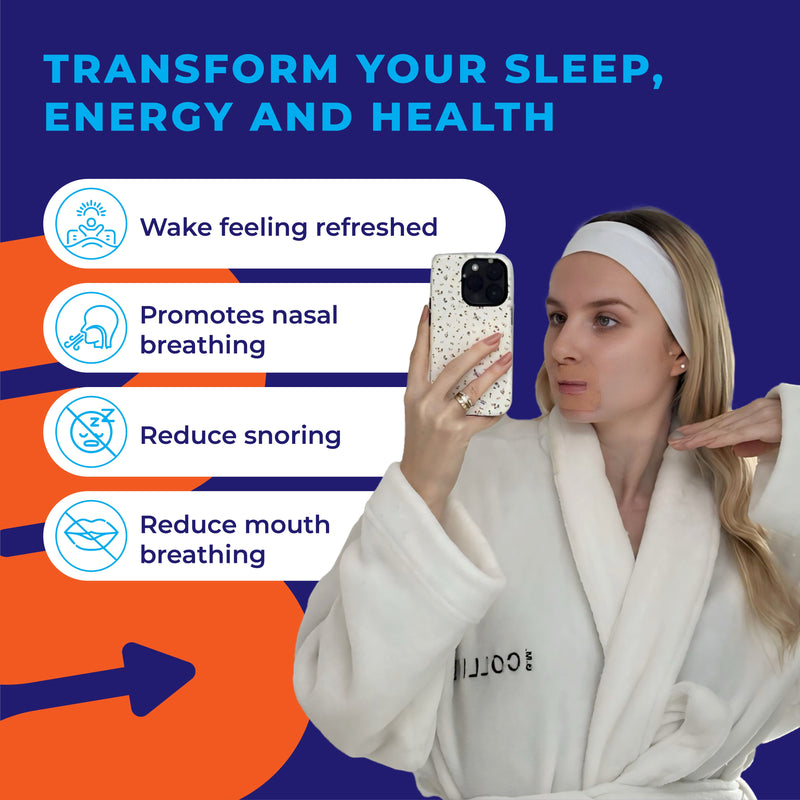
No new machine. No settings to change. No learning curve.
Apply one strip before bed, put your mask on as normal, and sleep. It adds about ten seconds to a routine you're already doing.
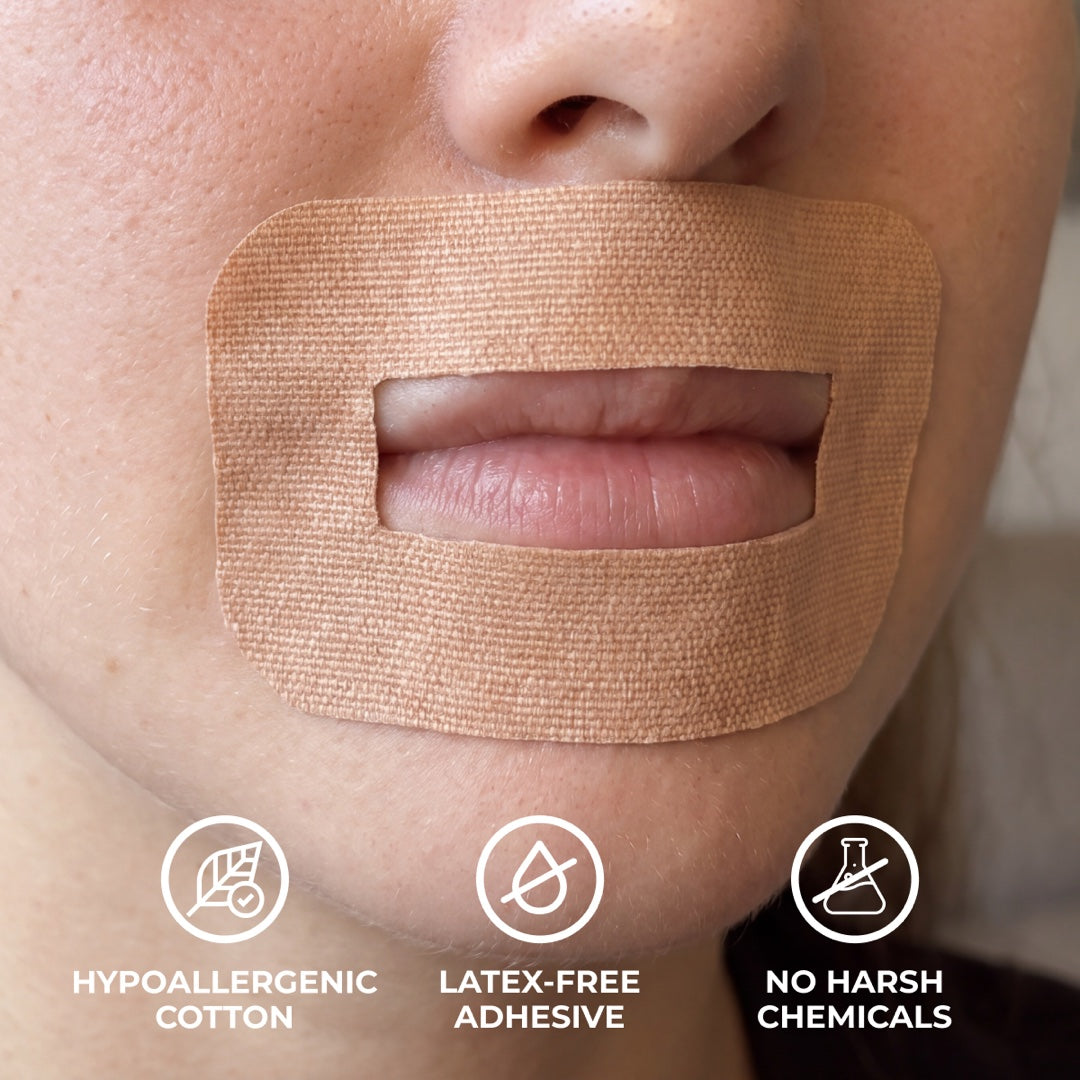
Between mask straps and mask marks, your skin takes a beating. The last thing you need is a harsh strip of tape.
MyoTape uses soft, hypoallergenic cotton and a skin-friendly adhesive — latex-free, and designed to peel away without the "ouch."
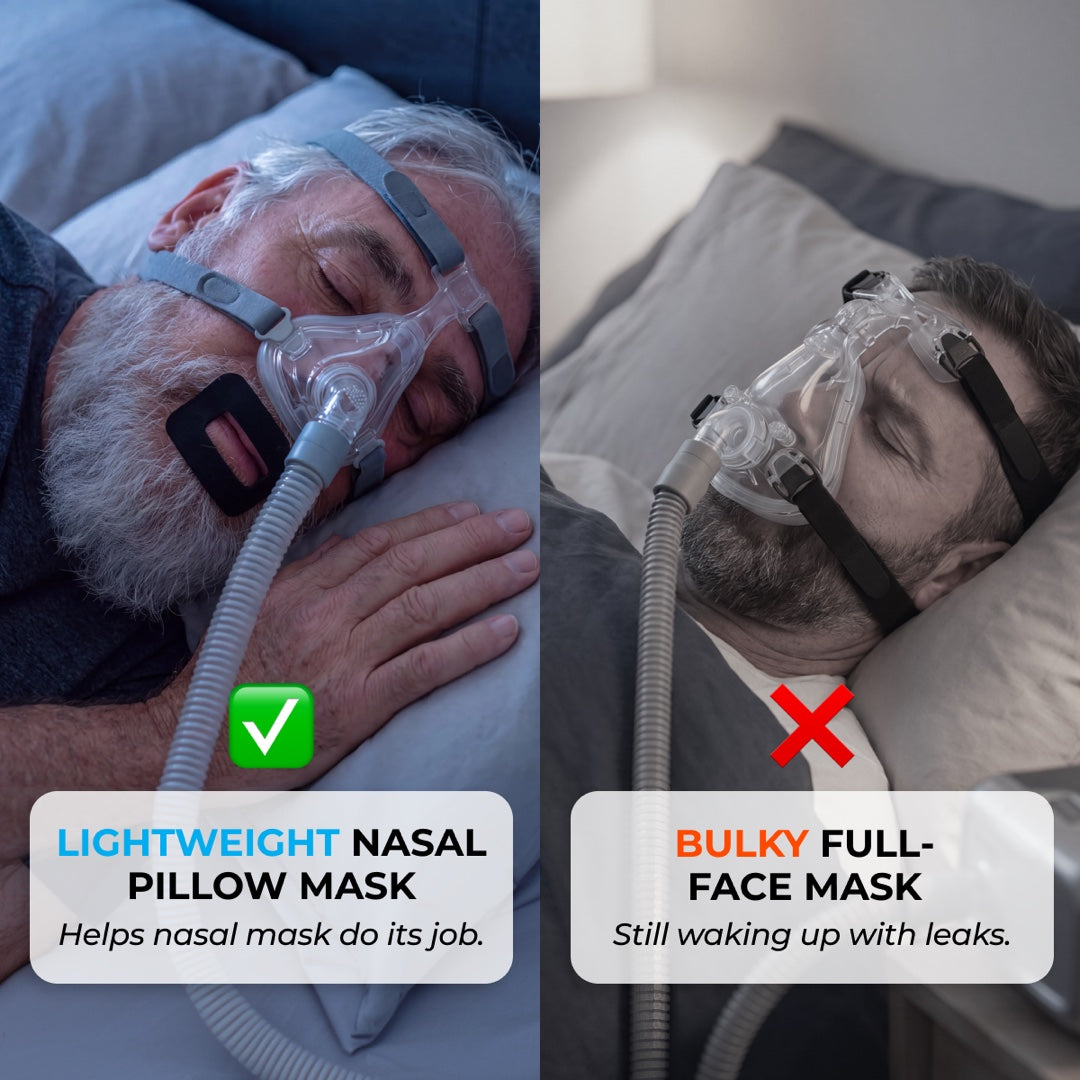
Unresolved mouth-opening is often what pushes people onto a bulky full-face mask — sealing the mouth from the outside because it won't stay shut on its own.
Keeping your lips gently closed removes that reason for many people.
Talk to your clinician before any change to your mask.

Created by Patrick McKeown — bestselling author, TEDx speaker and breathing educator since 2002.
Over 27 million MyoTape strips have shipped to 100+ countries.
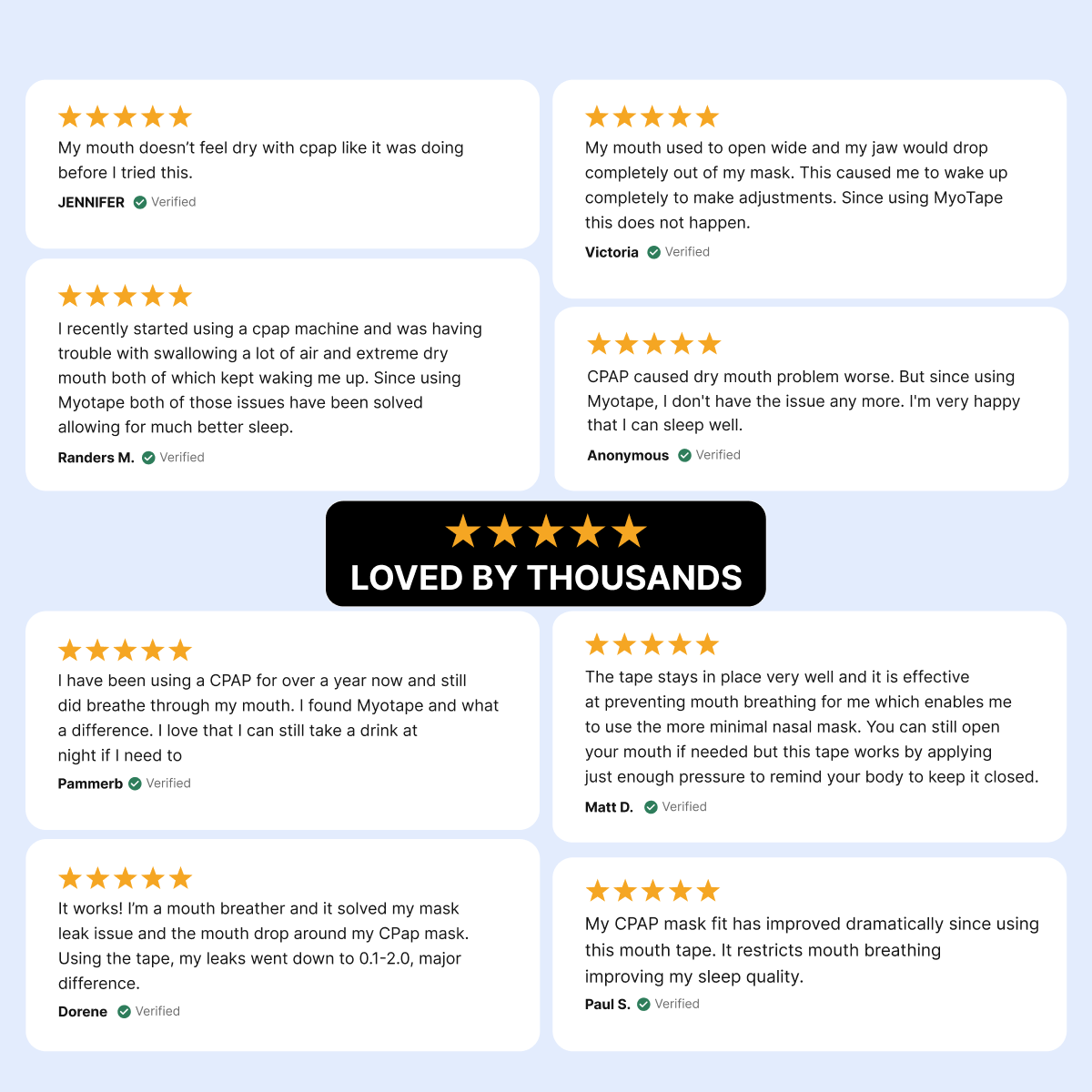
You're not the first to wear the machine faithfully and still wake up drained — and you won't be the last to be surprised by how much a gently closed mouth changes the night.
★★★★★ Loved by thousands of verified CPAP users.
Nasal CPAP alone vs. with MyoTape
"Your machine makes the pressure. MyoTape keeps it in. Together, your therapy can finally do its job."
MyoTape for Adults
Give your CPAP the closed mouth it needs to work properly.
Common questions
Is it safe to use with my CPAP?+
Yes. MyoTape is designed to work alongside CPAP, BiPAP and APAP therapy with any mask type. It surrounds your lips rather than sealing them, so you can open your mouth, talk, cough or take a sip of water at any time. Always continue your therapy as prescribed, and check with your doctor or sleep specialist if you're unsure.
Will it seal my mouth shut?+
No — and this is the question we get most. The elastic sits around your lips and gently encourages them to rest together. Your mouth is never covered and never sealed, so you stay in full control all night.
How does it help my nasal CPAP?+
A nasal CPAP holds your airway open by keeping steady pressure inside it, and that pressure needs to stay contained to work well. If your mouth falls open, pressure escapes and the system becomes less efficient. By keeping your lips gently closed, MyoTape helps the pressure stay where it belongs so your prescribed therapy can do its job.
What if my nose is blocked?+
MyoTape works by encouraging nasal breathing, so it isn't suitable on nights when your nose is congested from a cold or allergies. If you have ongoing difficulty breathing through your nose, speak to your doctor before use.
How do I use it?+
Peel one strip, stretch it slightly, and apply it horizontally around your lips with your mouth gently closed. Put your CPAP mask on as normal. In the morning, peel it away slowly. That's it — about ten seconds added to your routine.
Advertorial. This is a paid advertisement — not a news article, editorial or independent review. MyoTape is a breathing-training aid that encourages nasal breathing; it is not a medical device and is not a substitute for your prescribed CPAP therapy or medical advice. Always continue using your CPAP as directed and consult your doctor or sleep specialist about your treatment. Do not use if you have a blocked nose, a cold, or any difficulty breathing through the nose. Individual experiences vary. Some images and customer stories are illustrative.