
For sleep clinicians and researchers
Mouth leak isn’t just an open mouth. It’s a loss of pressure containment.
What the evidence shows about mouth leak during nasal CPAP, where breathing, oral function and lip support fit, and what still needs testing.
The problem, in published evidence
-
29.6%
of polysomnography-confirmed mouth-leak episodes were detected by CPAP device report waveforms.
Matsumura et al., Ann Am Thorac Soc 2025 (n = 20)
-
~48 min
less CPAP use per night with oronasal than nasal masks, with pressures ~1.5 cmH₂O higher.
Andrade et al., Chest 2018 (meta-analysis, 13 studies, 4,563 patients)
-
>90%
of analysed leak sequences showed mandibular opening before leak, with respiratory effort rising beforehand.
Martinot et al., Ann Am Thorac Soc 2026 (n = 200)
Two processes, not one
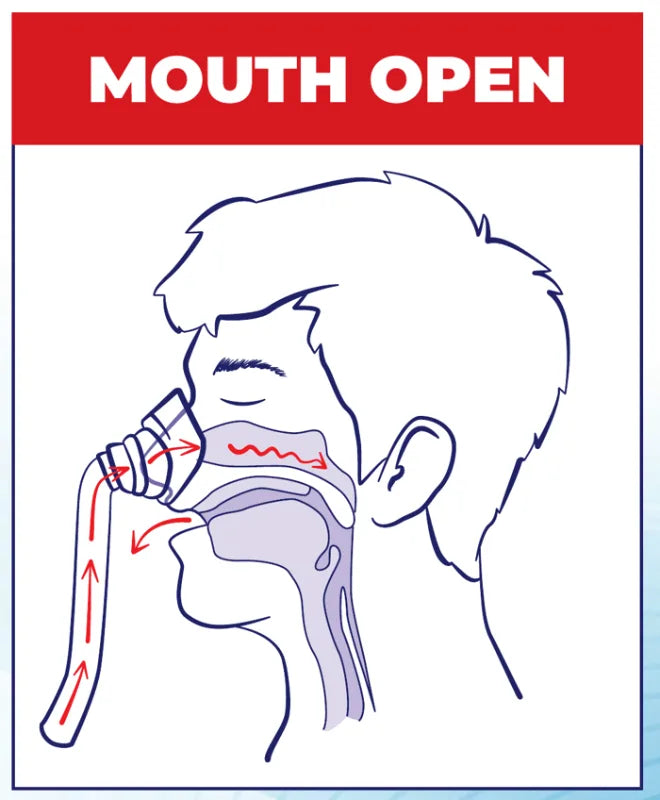
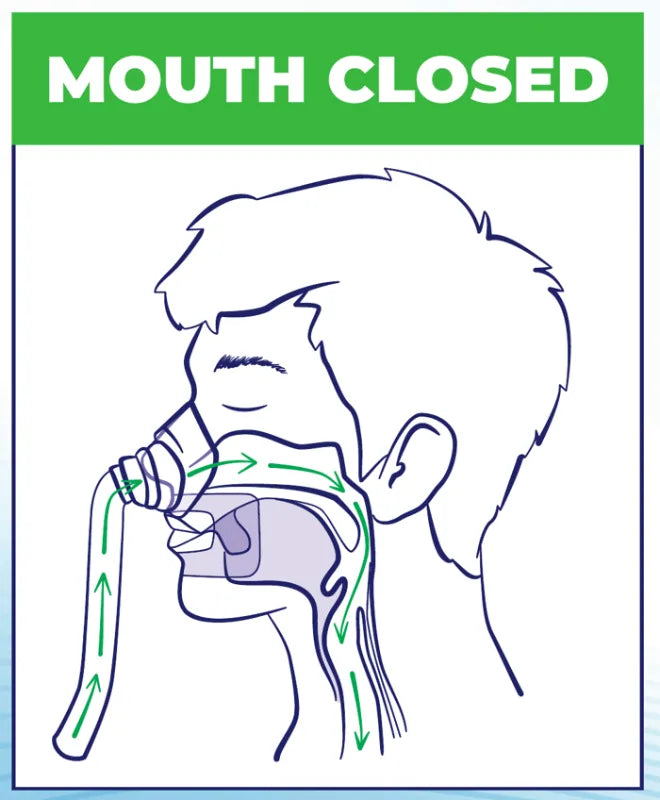
For leak to happen, nasal PAP pressure first has to reach the oral cavity, and then escape through the lips. Closing the lips addresses the second. Breathing and oral function bear on the first.
-
Breathing
Breathing re-education
Nasal breathing at rest, breathing pattern, thoracoabdominal coordination and ventilatory regulation.
-
Oral function
Orofacial myofunctional therapy
Tongue resting posture, lip and soft-palate function, oral coordination.
-
Lip containment
Non-occlusive perioral support
MyoTape supports relaxed lip closure. The lips stay uncovered and the mouth can still open.
Each has a physiological rationale. Whether they reduce objectively measured mouth leak on nasal PAP is still to be tested, and we want to test it with clinicians.
Questions clinicians ask
Does MyoTape seal the mouth?
No. It surrounds the lips without covering them, so the mouth can open voluntarily or reflexively, and the wearer can speak, cough or drink.
Is there evidence it reduces mouth leak on nasal PAP?
Not yet from controlled trials. There’s a physiological rationale and indirect evidence, which is why we want to study it with clinicians using objective leak measurement.
What about patients with nasal obstruction?
[Wording to confirm with Patrick: nasal patency assessment and contraindications.]
Does closing the lips solve mouth leak on its own?
Not necessarily. Lip support addresses external containment. How pressure reaches the oral cavity in the first place involves nasal function, tongue and soft-palate behaviour and breathing, which is where breathing re-education and myofunctional therapy come in.
What would be useful?
Tick anything that helps and we’ll follow up after the congress.
We’ll only use your details to follow up on what you’ve asked for. Privacy policy
Disclosure
MyoTape is made by Oxygen Research Institute Ltd, Galway, Ireland, which also runs Buteyko Clinic International training. Founder Patrick McKeown created MyoTape and is lead author of the framework review.
[Intended purpose and regulatory statement]
References
Andrade RGS et al. Nasal vs oronasal CPAP for OSA treatment: a meta-analysis. Chest 2018;153:665–674.
Matsumura E et al. Mouth leak is associated with sleep fragmentation during nasal CPAP. Ann Am Thorac Soc 2025;22:430–437.
Martinot JB et al. Respiratory effort-driven mandibular opening as a mechanism of air leak during CPAP therapy. Ann Am Thorac Soc 2026.
Madeiro F et al. Transmission of oral pressure compromises oronasal CPAP efficacy. Chest 2019;156:1187–1194.
Genta PR et al. The importance of mask selection on CPAP outcomes. ATS workshop report. Ann Am Thorac Soc 2020;17:1177–1185.