Mouth taping has become very popular lately. Some people claim it can help you sleep better, reduce snoring, improve your jawline, or even change your face. Others worry it might be unsafe. With so many opinions, it can be hard to know what’s true.
If you have been trying to make sense of it, you are not alone. There is a lot of mixed information online, and much of it is either exaggerated or overly negative. That makes it hard to know what really matters.
This article will explain the most common myths about mouth taping in a simple, practical way. You’ll learn what mouth taping can help with, what it can’t do, and how to use it safely.
What Even Is Mouth Taping?
Mouth taping is the practice of applying a small piece of tape to keep the lips together during sleep to encourage nasal breathing. Traditional approaches often involve sealing the mouth shut, which can feel restrictive and may not be suitable for everyone, especially those with breathing concerns.
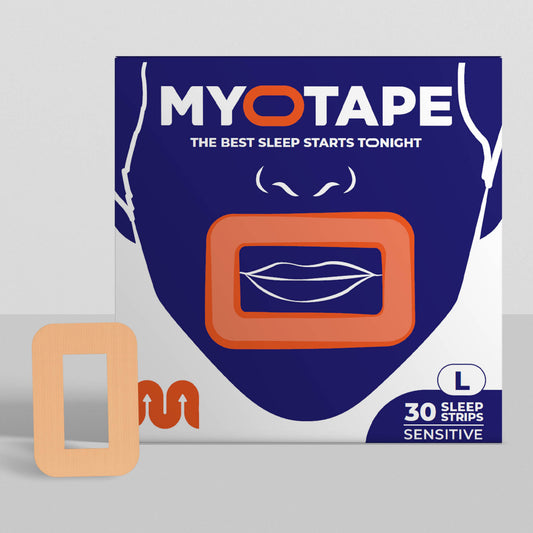
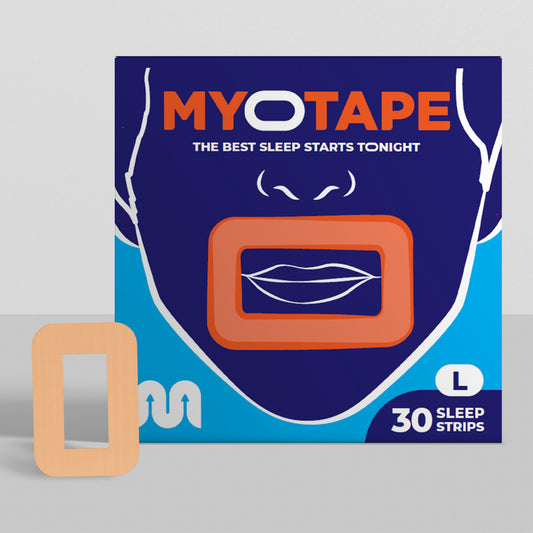
MyoTape takes a different approach. Instead of forcing the mouth closed, it gently brings the lips together, allowing natural movement and opening the mouth if needed. This makes it a safer and more comfortable option compared to conventional mouth taping.
The goal is not to block breathing but to support it. By encouraging nasal breathing naturally, MyoTape helps reduce dry mouth, improve sleep, and make mouth taping easier to use consistently. Read all the common mouth taping mistakes and how to avoid them.
Myth 1. Mouth taping is always safe for everyone
Mouth taping may seem simple, but it is not for everyone. The key requirement is the ability to breathe comfortably through your nose. If nasal breathing is limited, taping the mouth can cause discomfort or increase risk during sleep.
People with nasal congestion, enlarged adenoids or tonsils, allergies, a deviated septum, or chronic sinus issues may struggle to get enough air through their nose. In these cases, mouth breathing is the body’s backup system. Restricting it without addressing the root issue is not recommended.
There are also specific groups who should avoid mouth taping altogether. This includes people with severe sleep apnea, those prone to nausea or reflux, individuals with severe anxiety or claustrophobia, and anyone with sensitive skin or adhesive allergies.
A safer approach focuses on supporting breathing rather than restricting it. Products like MyoTape are designed to gently bring the lips together without sealing the mouth shut, allowing for natural movement and reducing risk.
Myth 2. Mouth taping is too dangerous or unsafe
Another myth is that mouth taping is very dangerous. This idea often comes from how extreme it sounds. Restricting your mouth during sleep can feel uncomfortable at first, so it is valid to question it.
There is no strong evidence showing that mouth taping is harmful for healthy individuals when used correctly. However, adverse reactions can occur if it is used in the wrong way or by someone with underlying breathing issues.
These risks usually come from poor practice, like sealing the mouth shut completely or using overly restrictive methods. This can increase discomfort and interfere with breathing if nasal airflow is limited during sleep.
This is why design matters. Using MyoTape, which allows the mouth to open if needed, significantly reduces this risk. The goal is not to block breathing but to gently encourage nasal breathing while maintaining safety.
Myth 3. Mouth taping treats severe sleep apnea
Mouth taping is sometimes seen as a simple alternative to sleep apnea treatment, but this is misleading. Sleep apnea is a medical condition that involves repeated airway obstruction during sleep.
Treatments like CPAP are designed to keep the airway open and maintain oxygen flow. Mouth taping does not perform this function and should never replace medical care.
In fact, for people with obstructive sleep apnea, fully sealing the mouth could potentially worsen airway restriction. This is why complete mouth closure is not recommended in these cases.
That said, mouth taping plays a supportive role with CPAP. Some people using CPAP find it helps reduce dry mouth and improve comfort. In mild cases, and under medical guidance, it may complement treatment, but it is not a standalone solution.
Myth 4. Mouth taping permanently improves your jawline
Claims about sharper jawlines from mouth taping are widely shared online, but they do not reflect how adult anatomy works. Bone structure and jaw alignment do not change from taping your mouth at night.
Facial appearance is influenced by genetics, bone structure, and body composition. These are not altered by short-term behavioral changes, such as mouth taping.
Some people may notice subtle differences in how their face looks at rest. This can be linked to improved posture, muscle relaxation, or better sleep. However, these are temporary or indirect effects, not structural changes from mouth taping.
It is important to separate visual perception from scientific reality. Mouth taping supports breathing habits, not facial reshaping.
Myth 5. Mouth taping can change your face shape
This mouth taping myth goes further than the jawline claim, suggesting mouth tapes can slim the face or reduce facial fat. There is no scientific evidence to support this.
Face shape is determined by underlying bone structure and fat distribution. These do not change through mouth taping or breathing patterns during sleep.
Many transformations seen online are influenced by lighting, posture, or weight changes. These factors create the impression of facial change without any structural difference.
Mouth taping should not be viewed as a cosmetic tool. Its value lies in supporting breathing and sleep, not altering appearance.
It is worth noting that this may differ in children, where facial development, including jawline and face structure, is still ongoing. In cases of habitual mouth breathing, early intervention with breathing retraining, and where appropriate medical or dental treatment, may help support more optimal facial development.
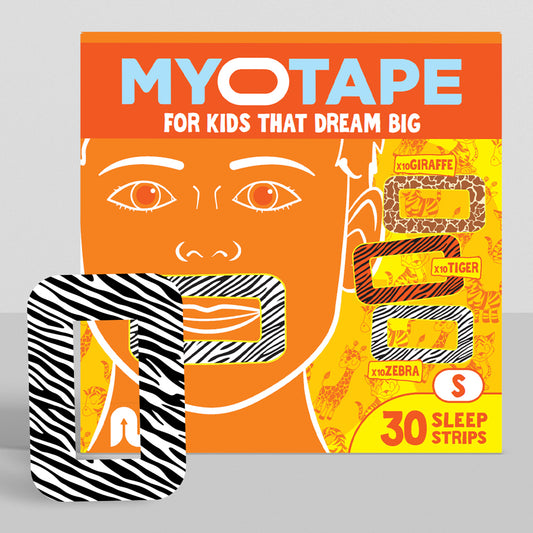
Mouth taping for kids can play a supportive role in encouraging nasal breathing, but it is not a standalone solution.
Myth 6. Mouth taping makes lips bigger
Mouth taping does not increase lip size. It also does not make lips smaller. These claims are based on temporary visual effects rather than real changes.
When the mouth stays closed during sleep, moisture is better retained. This can make lips appear more hydrated in the morning, which may be mistaken for fullness.
However, this effect does not last and does not reflect any physical change in lip structure, because lip size is not influenced by mouth taping.
A more accurate way to view this is as a comfort benefit. Reduced dryness can improve how your lips feel, but not their shape.

Myth 7. Mouth taping stops snoring in all cases
Snoring is a main reason people try mouth taping, and in some cases, it can help. This is especially true when snoring is caused by mouth breathing.
Keeping the mouth closed can reduce vibration of soft tissues in the throat, a common source of snoring. This is why many people notice improvement when they switch to nasal breathing.
However, not all snoring is caused by mouth breathing, as there is mouth and nasal snoring. Nasal blockage, obesity, and sleep apnea are also common causes. In these cases, mouth taping alone will not solve the problem.
Understanding the cause of snoring is essential. Mouth taping can be effective in the right context but is not a universal solution.
Myth 8. Mouth taping retrains breathing forever
Mouth taping can help encourage nasal breathing but does not permanently retrain breathing on its own.
Breathing habits develop over time and are influenced by daily patterns. Changing them usually requires consistent practice, including breathing exercises like the Buteyko Method.
Mouth taping works as a support tool. It helps reinforce nasal breathing during sleep, but the effect does not automatically carry over into waking hours.
For long-term change, it should be combined with conscious breathing training and lifestyle adjustments.
Myth 9. Mouth taping works better than CPAP and MADs
Mouth taping, CPAP, and mandibular advancement devices (MADs) serve very different purposes, even though they are often discussed together in the context of sleep and breathing.
CPAP and MADs are clinically approved treatments designed to keep the airway open during sleep, whereas mouth taping does not address airway obstruction and instead focuses on encouraging nasal breathing.
Comparing them directly can be misleading, as CPAP and MADs treat an underlying medical condition, while mouth taping supports breathing habits and may help reduce symptoms like dry mouth.
Although mouth taping can still be used alongside these treatments to improve comfort, reduce dryness, and support adherence, rather than replace them.
Myth 10. Mouth taping is completely fake
Some people dismiss mouth taping as just another wellness trend, but that is not accurate. When done properly, it can support healthier breathing during sleep.
Mouth taping encourages nasal breathing, which plays an important role in filtering air, regulating airflow, and supporting oxygen delivery to the body.
However, not all mouth taping is the same. MyoTape are designed to gently bring the lips together without sealing the mouth shut, making the process safer and more comfortable while still encouraging nasal breathing.
It is not a miracle solution, but it is not fake either. With the right approach and product, mouth taping can be a simple and effective way to support better breathing and sleep.
MyoTape Supports Healthy Breathing. That’s Facts.
Mouth taping is not fake but is often misunderstood and done incorrectly. The difference between a good and bad experience comes down to safety, comfort, and design.
That is exactly what MyoTape was created for. Designed by breathing expert Patrick McKeown, it gently supports your lips without sealing your mouth shut, allowing natural breathing while encouraging nasal breathing throughout the night. This makes it more comfortable, less restrictive, and easier to use consistently.
If you are serious about improving your sleep and breathing, start with a solution designed to work with your body, not against it. MyoTape makes it simple, safe, and effective to get started.
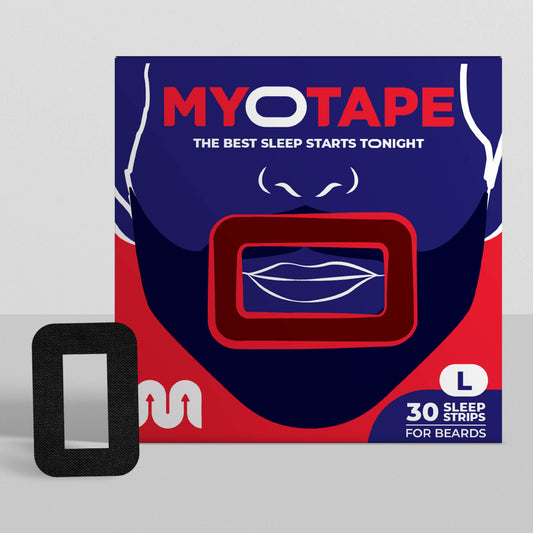
Visit the MyoTape online shop to find the right option for you, including mouth tape for kids, mouth tape for adults, mouth tape for sensitive skin, and mouth tape for beards.