Nasal strips are a popular, drug-free way to open your nose and breathe more easily. People wear them to ease a blocked nose, breathe more easily with a deviated septum, quiet their snoring, or simply sleep more comfortably.
But once you start wearing something on your nose every night, questions creep in. Is it safe? Could it irritate your skin or change your nose over time?
Here’s the reassuring part: nasal strips are generally safe for most adults when used as directed. Most problems, like mild skin irritation, come from how a strip is used, and they’re easy to avoid.
This guide explains what’s in nasal strips, which side effects to watch for, and how to use them safely, so you can breathe easier with confidence.
Why Nasal Breathing Matters at Night
Your nose is built for breathing. It warms, moistens, and filters the air before it reaches your lungs. It also keeps your breathing slower and calmer, which helps you sleep more deeply. Your sinuses also produce nitric oxide, which you carry into your lungs with every nasal breath.
When your nose feels blocked, you tend to switch to mouth breathing, especially during sleep. That’s often why people wake up with a dry mouth, a sore throat, or a heavy head. Mouth breathing can also make snoring louder.
Nasal strips make breathing through your nose feel easier, which is why so many people add them to their bedtime routine.
What is in Nasal Strips?
Nasal strips have a simple design with three main parts:
- Flexible bands: thin, springy plastic bands inside the strip.
- Adhesive: a skin-safe glue that holds the strip on your nose.
- Backing: a soft fabric or clear outer layer.
Once applied, the bands try to spring back to their flat shape. As they do, they gently pull the sides of your nose outward. This widens the nasal valve, the narrowest part of your nose and the spot where most airflow resistance happens. Even a small lift here can make a noticeable difference.
Nasal strips work mechanically, not medically. There’s no medication, and nothing enters your body. Some brands make scented versions, such as menthol, so check the label if you're sensitive to fragrances.
Are Nasal Strips Bad for You?
For most people, no. Because nasal strips don’t contain medication, they avoid risks associated with many medicines, such as drowsiness, raised blood pressure, or drug interactions.
That makes nasal strips a good option if you want simple, drug-free support for nasal breathing. People commonly use them to:
- Ease a stuffy nose from colds, allergies, or dry air.
- Reduce snoring linked to restricted nasal airflow.
- Breathe more comfortably during sleep.
- Keep nasal breathing easy while walking, running, or cycling.
- Cut back on decongestant sprays and tablets.
Most issues people report are minor and come from the adhesive, sensitive skin, or incorrect use.
Nasal Strips Side Effects
Side effects are uncommon and usually mild. The most common is skin irritation from the adhesive, which affects fewer than 5% of users. Others include:
- Minor soreness when removing the strip.
- Occasional nosebleeds, usually linked to dry air or rough removal.
- Pressure or a mild headache from a poorly fitted strip.
Used correctly, nasal strips are very unlikely to damage your nose. The pull is gentle; it affects only the soft outer part of your nose and stops the moment you take the strip off.

Are Nasal Strips Bad for Your Skin?
The skin on your nose is thin, so some people notice mild redness after wearing a strip. In rare cases, a glue sensitivity can cause itching or a light rash.
Irritation is more likely when a strip goes on over oils, serums, moisturizer, or makeup, sits on damaged skin, or comes off too quickly.
To keep your skin happy:
- Apply strips to clean, dry skin.
- Skip any area with cuts, sunburn, acne, or eczema.
- Take an occasional night off to stop sensitivity from building up.
- Stop using a product that causes ongoing itching, swelling, or a rash.
Can Nasal Strips Cause Nosebleeds?
Rarely, and the strip itself usually isn’t to blame. The lining of your nose is delicate, and dry indoor air, especially with the heating on in winter, can make it more likely to bleed. Rough removal can also irritate the area.
A bedroom humidifier, enough water during the day, and gentle removal all help. If you get frequent nosebleeds with or without strips, speak with your doctor.
Can Nasal Strips Cause Headaches?
A few people feel pressure or a mild headache, usually because the strip is the wrong size or sits too high.
Place the strip on the lower, softer part of your nose, just above the flare of your nostrils, not on the hard bone higher up. If you still feel pressure, try a different size or a gentler strip. The right fit usually solves it.
Is It Okay to Use Nasal Strips Every Day?
Yes, for most people. Nightly use is common and safe, and you can also wear strips during the day or while exercising.
Using nasal strips every day only becomes a problem if your skin starts to react. Wearing adhesive in the same spot night after night can leave skin dry or tender, so take an occasional night off. If redness, dryness, or peeling sticks around, give your skin a couple of nights to recover before starting again.
Do Nasal Strips Have Long-Term Effects?
Long-term use isn’t known to harm your nose. Nasal strips contain no medication and don’t change your nose’s structure, so nothing builds up in your body over time. Their effect stops as soon as you take the strip off. For most people, the only long-term consideration is skin care.
Can You Become Dependent on Nasal Strips?
No. Because they don't involve medication, nasal strips can’t create a physical dependency, and they won’t make congestion worse when you stop.
Decongestant sprays are different. Used for more than a few days in a row, often 3 to 5 days, they can trigger rebound congestion, where your nose gets more blocked once the spray wears off. That cycle keeps many people reaching for the bottle.
Nasal strips simply open your nostrils from the outside, so there’s no rebound. Some people keep using them because they enjoy breathing more easily, and that’s a preference, not a dependency. As your nasal breathing improves, you may find you need them less.
Do Nasal Strips Make Your Nose Bigger Permanently?
It’s a surprisingly common worry, but no. Nasal strips only lift your nostrils while you’re wearing them. The bands are far too gentle to reshape cartilage, so your nose returns to its normal shape as soon as you take the strip off.
Are Nasal Strips Safe for Everyone?
Nasal strips suit most adults, but a few situations call for extra care.
If you have a deviated septum, strips can improve airflow and make breathing easier, but they’re not a substitute for surgery when your doctor feels it’s needed. They also can’t clear deeper blockages such as nasal polyps or chronic sinus inflammation. If your nose stays blocked with a strip on, it’s worth getting checked.
Nasal strips don’t treat sleep apnea either. If you snore loudly and choke, gasp, or stop breathing during sleep, or feel exhausted after a full night’s rest, speak with your doctor or a sleep specialist.
Are Nasal Strips Safe During Pregnancy?
Pregnancy hormones and increased blood flow often cause the inside of the nose to swell, a condition called pregnancy rhinitis. It tends to feel worse at night.
Because nasal strips are drug-free, they’re an appealing way to ease congestion when you’d rather avoid medicines. Skin can be more sensitive during pregnancy, so remove strips gently, and check with your doctor or midwife before using them.
Are Nasal Strips Safe for Kids?
They can be, as long as you choose strips made for children. Adult strips are usually too big for a child’s nose, and young skin is more delicate. MyoTape Nasal Strips for Kids, for example, are sized and formulated for children aged 4 and over.
Choose a strip your child can tell you about if it feels uncomfortable, supervise younger children, and remove strips gently in the morning. You can learn more about using nasal strips safely with kids.
Regular snoring or mouth breathing in children can have an underlying cause, such as enlarged adenoids or tonsils, so speak with your child’s doctor first.
How to Use Nasal Strips Safely
It is also important to know how to apply nose strips correctly, here are some steps:
- Clean: wash and dry your nose completely. Oils, serums, and moisturizers weaken the adhesive.
- Place: center the strip on the lower part of your nose, just above your nostrils.
- Secure: press the ends gently for a few seconds, so the adhesive warms and sticks.
- Remove gently: To remove nasal strips without pain, hold a warm, damp cloth over the strip for about 30 seconds, or remove it after a warm shower. Then peel slowly from the ends toward the center.
Exercising? Sweat can loosen the adhesive, so apply the strip to completely dry skin and keep a spare for longer sessions.

Choosing the Right Nasal Strip
A good fit makes all the difference. Look at:
- Size: too large or too small, and a strip is more likely to press or peel.
- Strength: extra-strong strips hold more firmly, while standard strips can feel more comfortable at first.
- Skin sensitivity: If you have sensitive skin, choose nasal strips with a hypoallergenic adhesive.
- Allergies: If you have a latex allergy, choose latex-free nasal strips and read the label carefully.
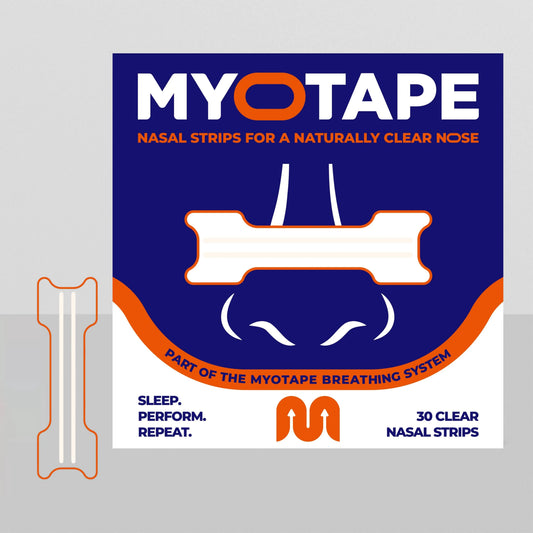
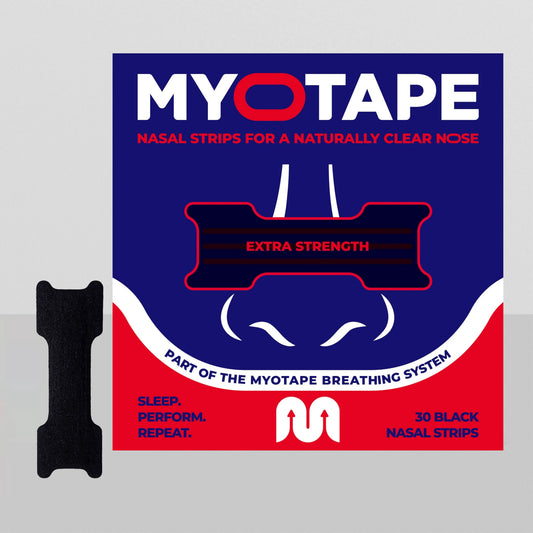
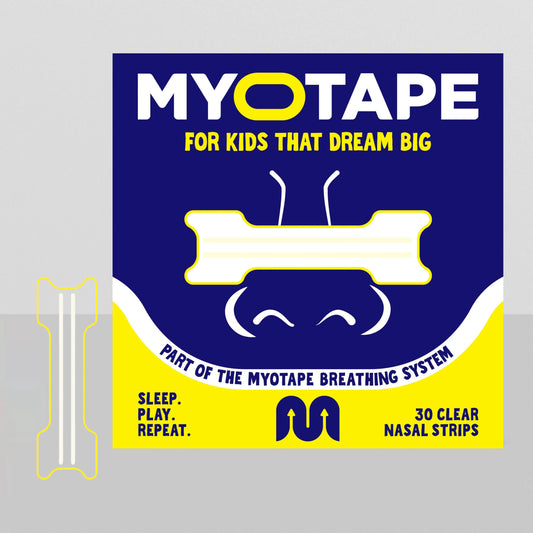
MyoTape Nasal Strips are flexible, drug-free, and made with a hypoallergenic adhesive that’s gentle on sensitive skin and easy to remove. Choose from:
- Adults (Clear): discreet and barely visible for everyday wear
- Adults (Black): an extra-strong hold for firmer support
- Kids: sized for children aged 4 and up
Clear Your Nose Before Bed
If your nose feels stuffy at bedtime, try the Nose Unblocking Exercise before putting on your strip:
- Breathe in and out gently through your nose.
- Pinch your nose and hold your breath.
- Nod your head up and down 5 to 15 times, depending on your comfort.
- Let go and breathe calmly through your nose. Rest for 30 to 60 seconds and repeat up to 6 times.
It’s a simple, natural way to ease congestion so your strip has less work to do. And the more you breathe through your nose during the day, the better it works at night.
Pair Nasal Strips with Lip Closure
A nasal strip only helps if air actually flows through your nose. If your mouth drops open during sleep, air takes the easy route through your mouth instead.
Nighttime mouth breathing can leave you with a dry mouth, sore throat, bad breath, and louder snoring. One study found it was linked to upper airway resistance around 2.5 times higher than during nasal breathing.
That’s why many people pair nasal strips with MyoTape Mouth Tape. Rather than covering your lips, MyoTape sits around your mouth and uses gentle elastic tension to remind your lips to stay closed.
Together, they form the MyoTape breathing support system: your nose stays open, your mouth stays closed, and you breathe through your nose all night.
Nasal Strips Pros and Cons
Pros:
- Drug-free, with no dependency or rebound congestion
- Easy to use and affordable
- Can ease congestion and reduce snoring linked to nasal airflow
- Safe for nightly, daytime, and exercise use for most adults
- A useful option during pregnancy, with your doctor’s approval
Cons:
- Can mildly irritate sensitive skin in a small number of users
- Uncomfortable if the size or placement is wrong
- Can loosen with sweat
- Don’t treat sleep apnea or replace surgery where it’s needed.
- Only work if you breathe through your nose.
For most people, the benefits clearly outweigh these small, manageable drawbacks.
Frequently Asked Questions
Are nasal strips safe to use every night?
For most adults, nightly use is safe. Apply them to clean, dry skin, remove them gently, and take an occasional night off.
Can you wear nasal strips while exercising?
You can wear them while sleeping, during daytime activities, and during exercise. For workouts, apply them to completely dry skin, as sweat can loosen the adhesive.
Can nasal strips make congestion worse?
Nasal strips contain no medication, so they don’t cause rebound congestion like some decongestant sprays. They simply open your nostrils while you wear them.
Can nasal strips permanently change your nose?
Nasal strips only lift your nostrils while you wear them. Your nose returns to its normal shape once you remove the strip.
Can you use nasal strips during pregnancy?
Their drug-free design makes them a popular choice for congestion during pregnancy. Check with your doctor or midwife first.
Do nasal strips cure snoring or sleep apnea?
They can reduce snoring linked to restricted nasal airflow, but they don’t stop mouth snoring or treat sleep apnea. If you choke or gasp in your sleep, see your doctor.
Can you use nasal strips and mouth tape together?
Many people use both. A nasal strip opens your nostrils while MyoTape Mouth Tape helps keep your lips closed, supporting nasal breathing all night.
Conclusion
Nasal strips are safe, simple, and drug-free, and they make breathing through your nose easier, especially at night. Side effects are rare, and the most common one, mild skin irritation, is easy to prevent.
Start with clean, dry skin, find the right fit, remove strips gently, and give your skin the occasional night off. If you’re pregnant, buying for a child, or dealing with ongoing breathing problems, check with your doctor first.
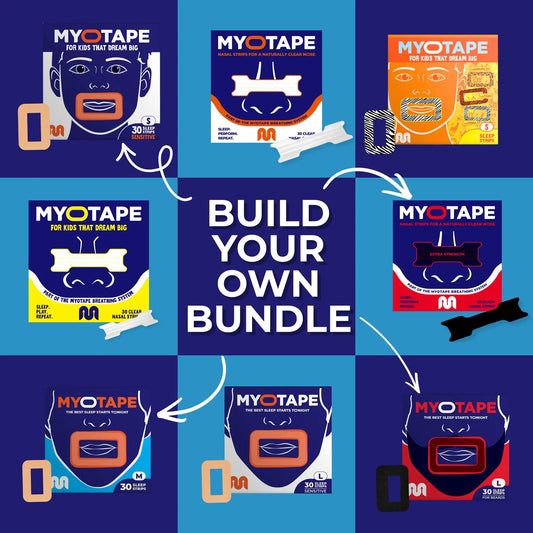
For the best results, keep your nose open and your lips closed. Explore MyoTape Nasal Strips and MyoTape Mouth Tape or build your own MyoTape Breathing Support System bundle.